Sunday, October 23, 2022

Al Kooper Going Going Gone 2005

Al Kooper made a bunch of great music in the sixties and seventies. His solo records from the period are great finds in used record stores, and most of it is available on CD and streaming. I wrote about his work in a post about his 2008 outing White Chocolate. His finest solo work is probably Black Coffee from 2005.

Black Coffee contained Al's excellent Going Going Gone. I've been feeling nostalgic for the past lately, since the present seems so much, well, not so good as the past. Al summed it up pretty well with Going Going Gone. The YouTube video is here.

Going Going Gone

I went to put my old boots on this morning
They were cracked on the side and had a hole straight through the sole
I went downtown to the store where I first bought ‘em
They said Al, they don’t make any boots like that no more

And that’s the way my whole life seems to be goin’
Like the world is playin’ some big ass joke on me
You know they just tore down the theater where I saw my first movie
One day it’s there, next day you couldn’t tell where it used to be

Going Going Gone
The things we took for granted, that we always counted on
If you had a million dollars you couldn’t even try them on
Cause today you can’t find no boots like that cause there going going gone

I used to fall in love to that deep soul music
It was the voices of the angels and they never told you no lie
Now you got pimps, gangstas and big-time rappers
They make the whole damn thing disappear right before our eyes

Going Going Gone
The things we took for granted, that we always counted on
And now you only hear that music on some oldies marathon
Pretty soon it won’t even be there no more cause it’s going going gone

I used to think I had my whole life before me
And in some small way I could change things all around
But now I feel that most people just ignore me
I got one foot in the gutter and the other foot in the ground

Going Going Gone
The things we took for granted, that we always counted on
I’d rather play this old guitar than to strap some new one on
Guess I’ll play that song this way till I’m going going gone
Even that beat-up pillow I love to lay my head upon
Will someday be my tombstone when I’m going going gone

Tuesday, October 4, 2022

Spinning Vinyl - The Blues Edition

I'm certainly not a huge blues fan, but there's plenty to like when it wins me over. So a stroll through the stacks recently caught the theme and...

Alvin Lee is a bad-ass guitar player, and the band includes a driving rhythm section and a hot shot organist. Lee also has a fine bluesy scream and wrote seven of the eight tracks. Ssssh is a stomping blues-rock classic.

I listened to side 1, with Waitin' On The Bus and Jesus Just Left Chicago, my favorite ZZ Top moment. But I had forgotten how great the side ended with Hot, Blue And Righteous. I was getting into the blues for real now, so that meant it was time for Buddy Guy.

Guy's guitar playing isn't like anyone's, at least not anyone I've heard. His leads can seem to almost lose the rhythm, but it never really happens, and he leaves me stunned every time. This one from 1994 was the start of a string of strong outings from the indomitable Buddy Guy.

The harmonica drenched Too Many Drivers, Ronnie Barron's It's Getting Harder To Survive, Mose Allison's If You Live, and Bobby Charles' and Rick Danko's Small Town Talk make for one great side. The Better Days band was short-lived and always in the wake of The Paul Butterfield Blues Band, but they had a nice organic sound and operated like a music co-op, with everybody getting some time, and making the most of it.

 
Southside Johnny has been through a fair bit, but he keeps doing it to death, and he's managed to produce more than a few solid albums since those first three classics between 1976-1978. Better Days 1991, Into The Harbor 2005, Pills And Ammo 2010, and this stone classic blues ball buster from 2000. Messin' With The Blues might be Johnny's best since those early days.

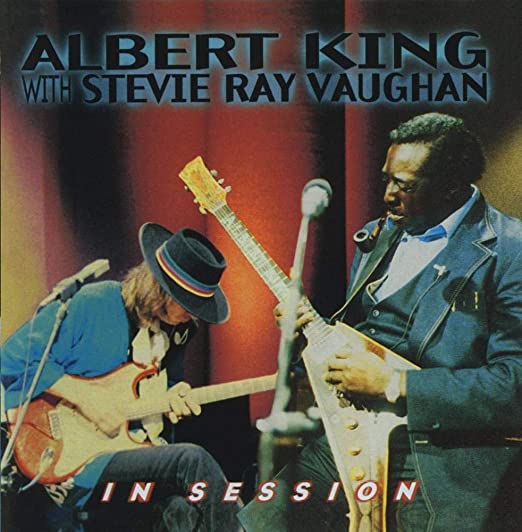
Albert King and Stevie Ray Vaughn. Vaughn was reverential, but he also came to play. King does Stormy Monday, and then Vaughn lights up Pride And Joy, on fat black 45 rpm plastic.

Bromberg's How Late'll Ya Play'Til? 1976 is another lost gem that more people should hear. A double album with one studio record and one live record, it might be the most stylistically sweeping statement of musical ability across genres available. On the live blues sides, the band is hot and Bromberg is having a ball.

These things have to end somewhere, and that somewhere this time out, is Savoy Brown, side one of Blue Matter 1969. The brief union of Kim Simmonds with Chris Youlden made for some fine blues from Savoy Brown. Youlden's solo career never really took off, and Simmonds has soldiered on impressively, but the two of them together were unique.

Tuesday, September 27, 2022

Frank Sinatra


As a teenager in the 1960s, I had little interest in Frank Sinatra. He was a singer from another time who was still around, doing the same thing he'd always done. He was a square from my father's generation. It didn't help much that his voice was beginning to change in a bad way, or that he tried in vain to seem hip by covering pop tunes of the day. I was listening to Beatles, Stones, and the whole raft of British Invasion groups, Motown and more gritty Southern soul, and plenty of American pop music from surf music to folk groups.

Later, as I got a bit older and began exploring jazz from the 1950s, I also began a reevaluation of some of the great singers of the 1950s, including Tony Bennett, Peggy Lee, Nat "King" Cole, and Frank Sinatra. And I began to realize that Sinatra was a singular vocal talent, a singer of enormous soul and depth, a man who could inhabit a lyric like no one else.

Of course the Sinatra catalog is a daunting thing of epic proportion, and he worked for several record labels that until more recently meant that a through overview was a challenge for the consumer. I'm not an expert on his work, and this is not the definitive buying guide, but I own a few CDs and a bunch of LPs that I mostly bought used, and some of them are really great. 

Sinatra first recorded for Columbia as the singer for the Harry James Orchestra in 1939-40, and for RCA with the Tommy Dorsey Orchestra from 1940-42. He then began recording singles (78 rpm) under his own name from 1943-52 for Columbia. I have the 2 CD set Portrait Of Sinatra- Columbia Classics (1997) that covers this period, and it is some great stuff. His voice is strong and young, and he is already the nuanced singer that his work in the 50s and 60s reveals in detail. 

From 1953-1962 Sinatra recorded for Capitol Records, releasing a bevy of singles and a ton (23 actually) of LPs. This period, at least in my view, is the greatest era of Sinatra's career. His voice is still in great condition, albeit slightly lower in register than in the forties, and the material, arrangements, and recording technology are all excellent. And it is in this time that Sinatra records much of his most memorable material. One of the first "concept" albums, 1955's In The Wee Small Hours is well worth seeking out as either used LP or newly reissued LP or CD. It is themed around loneliness and heartache, and Sinatra's way with a ballad is as good as any singer, anytime. A single CD that might be almost all the Sinatra you need, Classic Sinatra His Greatest Performances 1953-1960 is worth having. It is the essence of Sinatra's greatness distilled down to twenty tracks, and every single one of them is superb.


Sinatra in the sixties is a mixed bag. Some of his most famous recordings happened in the sixties, and even if they weren't as great as his fifties work, there are still some fine performances to be had. When Sinatra went to Reprise, a label he owned, he produced some of his less well-reviewed records in the early sixties. But by 1965's September Of My Years, he was making a rebound. Strangers In The Night 1966 continued the hot streak. In the midst of all this came Moonlight Sinatra 1966. Released in March, by May, Sinatra's own Strangers In The Night made Moonlight Sinatra invisible. It may be the great overlooked Sinatra record. 

The late sixties and seventies were not kind to Frank Sinatra. His voice changed, and not really for the better. It's wrong to say he wasn't still a great singer, but his instrument was not what it had been. He was not to be the artist that ages gracefully in his voice, and he knew that mostly by the seventies, and his output waned significantly.

You might want to explore one of the single CD Reprise era collections, like Sinatra Reprise: The Very Good Years 1991 or Nothing But The Best 2014. But those fifties performances on Classic Sinatra will not be bettered, I assure you.

Thursday, September 1, 2022

The Tutles Golden Hits 1967

If you've read this blog fairly often, you'll know I love a lot of sixties music and enjoy a good "best of" from the era. The Turtles seem like just the kind of thing I might really enjoy. But you and I would be wrong this time. 

The big hits are here, what there was of them. Of course Happy Together, their only number 1, is a classic of sunny and bright mid-sixties pop. She'd Rather Be With Me (think Cowsills or Buckinghams) got to number 3 itself, and is a good one. You Baby is OK in a Lovin' Spoonful sort of way, and Outside Chance, their rocking-est tune, is a b-side worthy of the Nuggets garage band compilation.

Most of the other songs managed to break into the high numbers on the hot 100 charts. So not really hits per se. So Goes Love is only so-so, and Let Me Be isn't terrible, and sounds like the Association. Grim Reaper Of Love, Is It Any Wonder?, Can I Get To Know You Better?, and You Know What I Mean are all just OK at best. Their first top ten hit, Dylan's It Ain't Me Babe, is a saccharine version of the song.

4 of 11 is not great numbers. And this one came out before Elenore, so their closest replica of Happy Together isn't here. There are better, more recent compilations, although I doubt that a CD with a lot more tracks is the answer. I'd look for the CD with the least songs. Or just download Happy Together, Elenore, and Outside Chance and be done with it.

Of course the post-Turtles story is pretty unusual, and unusually successful given the overall quality of their original material. Howard Kaylan and Mark Volman (as Flo and Eddie) went on to join The Mothers Of Invention for the least interesting era of that band from 1970-1971 (which, to be generous, was only partly their fault). They then sang back-up vocals on an unusual array of early and mid-seventies records, and recorded some comedy rock records as well. They managed to place their songs in movies with some regularity, and released several compilations of Turtles material. In the last 12 years, they've done the sixties oldies circuit with the mostly successful Happy Together tours, bringing many sixties acts of varying import along for the ride.

Thursday, August 11, 2022

Van Morrison What's It Gonna Take? 2022

So let's say you come over to my place and sit in the good seat and I play you some of the new Van Morrison record. And after five songs you think, well, this isn't too bad. Maybe not his best work, but OK for an old guy making his 43rd studio album. Absolutely Positively The Most isn't bad, a quasi-spiritual tune that sneaks in a single reference to lock down. I Ain't No Celebrity and Stage Name are both just OK, but Fear And Loathing In Las Vegas and Pretending are actually pretty good ones from Van The Man. But those are the last five tracks, and the ten before those are all Van ranting about lock down, the government is lying (and the media, too), etc. etc. blah blah blah. Even if you agree with his politics, it's a difficult listen at best. I mean, in the past when Van would go on about the music business treating him so badly (his net worth is only 90 million), it got old, but it was only one song per record.

The good news is that the music is at least as good as Van's recent better work. Roll With The Punches, The Prophet Speaks, and Three Chords And The Truth were all pretty good, and musically similar to this, and Van is singing fine. But the lyrical content is just him ranting like the anti-vax, paranoid, I have to get out and play millionaire whiner that he has become. I enjoyed Van Morrison's work throughout his career, and stuck with him even through the lesser records. But this one is even worse than Latest Record Project Volume 1. Maybe not really worse- the ratio of decent songs that aren't ranting is about the same, but that was two CDs, and this is just one CD, so there's less redemption here.

Music is OK, singing is good, and again, the best way to enjoy this one is by being unfamiliar with the English language so you don't realize how much garbage he's spewing. I should point out that Van Morrison has made grants to Northern Ireland musicians that lock down has hurt much more than it has hurt him, so he's not all blather, and that's admirable. But now it's time to see if he could get back to what he does well. Make music we can all enjoy, with lyrics about idyllic nature, love, and the blues, without all the ranting and raving against Robin Swann.

Friday, July 8, 2022

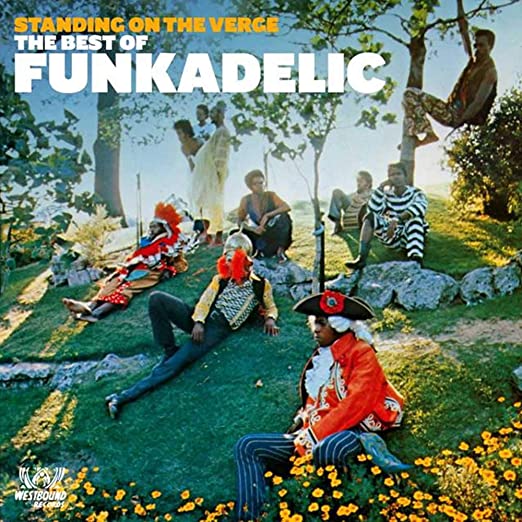
Funkadelic Standing On The Verge- The Best Of Funkadelic 2009

Funkadelic were a fascinating band, starting as early as 1969, producing psychedelic soul music that you could dance to. A few years down the road, they focused more on the dance floor, putting out funk jams that dug a deep groove and rivaled James Brown and any other funketeer on the scene. And they also featured hot Hendrix-inspired guitar from the inimitable Eddie Hazel and later Michael Hampton. George Clinton's hallucinogen-inspired philosophical ravings add an element of strange/crazy/hilarious moments.

In my view, their records were somewhat less than perfect (only a few came close). For someone that just wanted to know what their best work sounded like, a "best of" or "greatest hits" would be a fine service to the music-loving community.

But there were problems with that idea. From 1969-1976, Funkadelic made eight records for the small Westbound label, and then went to Warner Brothers for four more records between 1976-1981. And for the next twenty-eight years you could get compilations that featured only one of those two record labels output. They made more music for Westbound, but a few of their biggest hits, including their biggest, One Nation Under A Groove, were on Warner Brothers. So finally in 2009, this compilation included music released on both labels, and allowed you to take in the sum of their best work. This record features three tracks from the Warner Brothers years, One Nation Under A Groove, (Not Just) Knee Deep, and Comin' Round The Mountain. The material was licensed to Ace Records in the UK and released under the Westbound/Ace nameplate.

It isn't perfect, but it is closer than any other single compilation. Most of the longer tracks are included here in their shortened single edits, so some of the more extended jams are cut short, and this reduces the amount of great guitar playing on some songs. So you don't get fifteen minutes of Knee Deep or seven minutes of One Nation Under A Groove. But you do get the entire ten minute version of Maggot Brain, the admired and inspired Eddie Hazel guitar showcase. And you get early material from the first three records, and plenty more from their later Westbound releases.

What don't you get? You'll miss out on Who Says A Funk Band Can't Play Rock?! (from One Nation...) and there is nothing from The Electric Spanking Of War Babies 1981, a record that is considered by some as rivaling their best work. It seems like adding just one from that release would complete the set in a nice way. Every other record they released from 1969-1979 is represented by at least one track.

Is there anything else? Well, yes. This is the first release anywhere of their early self-released single Whatever Makes My Baby Feel Good from 1969, which was credited to Rose Williams and Funkadelic. So if you have to have it all, there's that, and it is a good song that shows off their talents early on.

Who needs this record? Well, I'm happy with it as it features some cuts from the first two records, and adds a few good ones from some of their less fulfilling outings. So for a good overview, it rocks. I already own One Nation Under A Groove 1978, Uncle Jam Wants You 1979, Standing On The Verge Of Getting It On 1974, and Maggot Brain 1971, but I didn't feel like I needed it all, and some of their other records have only a strong track or two. You might seek out one of the many Westbound compilations, and then add One Nation Under A Groove and Uncle Jam Wants You (both on Warner Brothers, and excellent).

If you don't own any Funkadelic and want to hear what the fuss is about, or you want a taste of what you don't already own, this is the best choice for a single compilation.

Saturday, June 11, 2022

Cassandra Wilson Another Country 2012 and Coming Forth By Day 2015

I've been catching up on some more recent Cassandra Wilson releases. Another Country 2012 features Fabrizio Sotti, an Italian guitarist. He assists Cassandra with songwriting, producing, and of course he plays guitar. Beautiful, expressive, perfect guitar. It is no surprise to hear Wilson collaborate with a guitarist as she is one herself, and her bands both live and in studio have featured guitar and percussion over piano or horns for her preferred sound.

I hadn't heard it since it wasn't just a Cassandra Wilson record, and I wasn't sure about "featuring" another artist. Let's put that to rest. This is a wonderful Cassandra Wilson record made even better with the addition of Mr. Sotti. These two are great for each other. All the things about her great Blue Note releases is here in spades, perhaps just a little sparser than usual, with a small combo of guitar, percussion, bass, and accordion. The songs are all co-writes except the opening Red Guitar by Wilson and a version of O Sole Mio that Wilson and Sotti arranged. If you like Wilson's work for Blue Note (1993-2010), you'll want to hear this.

Coming Forth By Day 2015, a tribute to Billie Holiday, should be exciting news, but instead it is an unfortunately flawed record. Song selection is fine with songs both written by and/or associated with Billie Holiday. But the overly "atmospheric" sound is just too much for my tastes, and the record never seems to leave the ground. What could cause this? Well, for starters, the record was produced by Nick Launay, producer for Nick Cave and the Bad Seeds, as well as countless pop-rock and punk records. Launay may have a fine reputation for the work he has done, but none of that work has been jazz. Additionally, he uses the bass and drummer from the Bad Seeds, and while they may be fine musicians, they aren't jazz pros, and they don't help. Bassist Martin Casey sounds especially wrong for these tunes.

On a few songs, and when there is some semblance of energy, there is moderate success. But the overuse of echo, looped guitars, ethereal, atmospheric sounds and too slow pacing makes this a better nap soundtrack than an engaging record. I should point out that several songs are made better with Van Dyke Parks' string arrangements as well as the work of The Section Quartet and their leader/arranger Eric Gorfain. At least if you're going to go languid, add some nice strings.

Wilson's singing isn't the problem, nor does it overcome the problem. The problem is too much ambiance and not enough energy. A major disappointment from a usually fine artist that has given us so many great recordings.