Monday, January 9, 2023

Best of 2022

Bonnie is on a heck of a late-career roll. This one and the two before it are all excellent.

Richard X Heyman has been doing his New York power pop for thirty years and fourteen albums. This new one ranks among his best.

Cleary is as much fun as New Orleans can be. A talented pianist, songwriter, and singer. Dyna-mite indeed.

Sloan has made more great ones than good ones. This is the great kind.

Wet Leg make pop that's got hooks, catchy choruses, and some pretty funny lyrics, too.

I once again looked over the end-of-the-year lists. Most of what is popular these days I haven't heard. Wet Leg and Bonnie Raitt made quite a few of those lists, so I might not be totally out of it.

Thursday, December 15, 2022

Sloan Steady 2022

Sloan have made exactly two kinds of records. Good ones and great ones. This is one of the great ones.

What makes the difference? Mostly it is the songs themselves. On a great record with many great songs, an occasional merely good song sounds just fine. On a good record with only a few great songs, the merely good songs start to rule the day. And there you have it. In the case of Sloan, it is perhaps arguable that some of their good records suffered slightly from recording or production differences that their great records did not have to work through. But it's mostly the songs.

Sloan have all the essential elements associated with great bands. As I've mentioned numerous times before, great bands need a great drummer (Andrew Scott more than qualifies), a good singer (Sloan has four), and a good songwriter or two (again, Sloan has four). They have recorded thirteen original studio records, and none of them are less than good. But the great ones still stand out as records you can listen to from start to finish without even a whiff of disappointment.

There's a bunch of reviews online already that you can use to help you dissect this new record. But all you need to know is that if classic rock and power pop are your bag, Sloan firing on all cylinders is the obvious answer. Great songs, great harmonies, solid lyrics, melodies and hooks abound.

So which ones are great and which ones are "merely" good? The good ones are Smeared 1992 (a solid debut but still clinging to a post punk sound that gets tempered as they mature), Pretty Together 2001, Action Pact 2003, Parallel Play 2008, The Double Cross 2011, and Commonwealth 2014 (which suffers more from the concept than the execution). Most of their 2000s records just don't have the consistency of their 90s output, but there's room for plenty of opinions if you happen to be partial to one of these.

The great ones are Twice Removed 1994, One Chord To Another 1996, Navy Blues 1998, Between The Bridges 1999, Never Hear The End Of It 2006 (an amazing thirty songs in 76 minutes), 12 2018, and Steady 2022.

Any band that can rack up seven classics in thirty years is an impressive band. That the same four guys have been there the whole time is pretty amazing.

Wednesday, December 7, 2022

Zappadan 2022

Yes, it is Zappadan. December 4 - December 21, every year since 2006 when it was initiated as a blogswarm by The Aristocrats, a now defunct blog.

Of course, blogs are less popular now than in 2006. There's some Zappadan celebration on Twitter, and Facebook, there's Fred Handl's lovely work on YouTube, and Aaron Pryor is still at it on his blog. But it is getting harder and harder to find much excitement around the holiday like way back in 2006-07 when things were new and Fried Green al-Qaedas, The Aristocrats and Mark Hoback were on the scene.

I haven't acquired any more Zappa music this year. It will be interesting to see what happens now that the vault has been sold. Hopefully Universal Music Group will handle things with some small measure of decorum. 

I have many years of past Zappadan posts here, and a slightly longer list of Zappa related posts (including Zappadan) here. 

If you're planning to celebrate, remember the rules. There aren't any.

Thursday, December 1, 2022

Christine McVie 1943-2022

Christine McVie passed away yesterday. McVie was an excellent songwriter with a feel for a pop/rock melody, a singer with a lovely contralto voice, and a fine rocking piano/keyboard player. 

She wrote many of Fleetwood Mac's biggest hits. On their 1988 Greatest Hits, McVie wrote eight of the sixteen songs. Her songs also helped keep the band afloat in the early seventies during the Danny Kirwin/Bob Welch years, when McVie's songs were frequent album highlights (Show Me A Smile, Spare Me A Little Of Your Love, Remember Me, Believe Me, Heroes Are Hard To Find, Come A Little Bit Closer). 

She retired from Fleetwood Mac in 1999 and mostly lived a quiet life in Kent, although she rejoined the band in 2014 and recorded and toured behind the Lindsey Buckingham Christie McVie album in 2017.

Even when the band was the fuel for personal controversies in the press, she kept her head up, never said bad stuff about anyone, and remained the consummate professional. 

A class act all the way. Godspeed Christine McVie.

Tuesday, November 15, 2022

Loggins and Messina Mother Lode 1974 Native Sons 1976

Loggins and Messina had a five year stint as a successful pop/rock/country duo in the early seventies. Over the course of five years they made five original studio albums, one covers album, and a two LP live set. More than just a duo, they were a solid band (assembled by producer/arranger Messina) that stayed together for most of their tenure.

I saw them live and they put on a good show. 

Jim Messina quit Poco to become an independent producer, and because he was tired of touring. That didn't last long when he was hired to produce Kenny Loggins' first solo record. To offset Loggins' penchant for soft folk, Messina wrote, arranged and sang so much of the record that it became Kenny Loggins with Jim Messina Sittin' In 1971. The follow-up was titled Loggins And Messina 1972, and included their biggest single the #4 hit Your Mama Don't Dance, and that was followed by Full Sail in 1973. I used to own all of their five original studio LPs, but those first three were purged from the stacks many moons ago. Loggins' syrupy ballads and Messina's light pop/rock just didn't hold up twenty or more years later. 

Recently I realized that their last two studio records were still in my collection, and I got them out to listen to them and see if they were indeed still worth having. 

The band included Messina on guitar and mandolin, Loggins on rhythm guitar, Larry Sims bass, Merle Brigante drums and percussion, Al Garth on violin and sax, and Jon Clarke on flute, saxes and horn. Their albums always included additional percussion and keyboards (Michael Omartin on the first three). If that doesn't sound like the line-up for a country band, you would be entirely correct. In fact, when they extended songs with lengthy instrumental breaks, they made some of their best moments.

Interestingly, Mother Lode 1974 was their highest charting album at #8. That seems right to me, as I feel it was their best record overall, even though the solid chart showing probably had more to do with the strong showing of their previous two releases. The record opens with Loggins' Growin', a snappy pop number that only got to #52 on the singles charts. Be Free is a strong pop number from Messina that features a lengthy instrumental section featuring flute, mandolin, violin and oboe. Changes is a syncopated rocker that shows off keys by David Paich (later of Toto fame). Brighter Days, a pretty Loggins ballad, and the jazzy rock of Time To Space round out side one.

Lately My Love is a mid-tempo rocker that features tasty lead guitar from Messina. Move On has another extended instrumental section that shows off some fine sax and more guitar. Get A Hold again features Messina's guitar, this time with chicken-pickin' wah wah style. Keep Me In Mind is a nice ballad sung by bass player Simms with another solid arrangement. Loggins' ballad Fever Dream rounds out the record with a good sax that almost saves it. With at least seven out of ten really strong tracks, it's a keeper.

Native Sons 1976, their swansong, comes sort of close to the quality of Mother Lode, but not quite. For this one, they added two more sax players, and Sanford and Townsend on back-up vocals and songwriting on two songs. But some of the songs are just not up to snuff. Both Loggins (My Lady, My Love) and Messina (Pretty Princess and When I Was A Child) toss out some too-sweet treacle, and Messina writes a good tune with insipid lyrics on It's Alright. Boogie Man is too lightweight, although the piano on the break is nice. The record is saved by Wasting Our Time, a solid pop tune from Loggins and John Townsend, Peacemaker, a political pop song with nice violin, sax and vibes, Fox Fire, the only song on the record featuring a sweet Messina lead guitar, and the opener Sweet Marie. So about half of it is good.

Messina went on to record quite a few mostly neglected solo albums, some of which featured his love of Latin music, and Loggins had a moderately successful solo career that benefited from a number of hits on movie soundtracks, including Footloose (the #1 title track, which he wrote) and Danger Zone (#2 on the singles charts) from Top Gun. They reformed for successful tours in 2005 and 2009, and hopefully they made a big wad of dough. Mother Lode might be a surprisingly fun find in a used record store.

Sunday, October 23, 2022

Al Kooper Going Going Gone 2005

Al Kooper made a bunch of great music in the sixties and seventies. His solo records from the period are great finds in used record stores, and most of it is available on CD and streaming. I wrote about his work in a post about his 2008 outing White Chocolate. His finest solo work is probably Black Coffee from 2005.

Black Coffee contained Al's excellent Going Going Gone. I've been feeling nostalgic for the past lately, since the present seems so much, well, not so good as the past. Al summed it up pretty well with Going Going Gone. The YouTube video is here.

Going Going Gone

I went to put my old boots on this morning
They were cracked on the side and had a hole straight through the sole
I went downtown to the store where I first bought ‘em
They said Al, they don’t make any boots like that no more

And that’s the way my whole life seems to be goin’
Like the world is playin’ some big ass joke on me
You know they just tore down the theater where I saw my first movie
One day it’s there, next day you couldn’t tell where it used to be

Going Going Gone
The things we took for granted, that we always counted on
If you had a million dollars you couldn’t even try them on
Cause today you can’t find no boots like that cause there going going gone

I used to fall in love to that deep soul music
It was the voices of the angels and they never told you no lie
Now you got pimps, gangstas and big-time rappers
They make the whole damn thing disappear right before our eyes

Going Going Gone
The things we took for granted, that we always counted on
And now you only hear that music on some oldies marathon
Pretty soon it won’t even be there no more cause it’s going going gone

I used to think I had my whole life before me
And in some small way I could change things all around
But now I feel that most people just ignore me
I got one foot in the gutter and the other foot in the ground

Going Going Gone
The things we took for granted, that we always counted on
I’d rather play this old guitar than to strap some new one on
Guess I’ll play that song this way till I’m going going gone
Even that beat-up pillow I love to lay my head upon
Will someday be my tombstone when I’m going going gone

Tuesday, October 4, 2022

Spinning Vinyl - The Blues Edition

I'm certainly not a huge blues fan, but there's plenty to like when it wins me over. So a stroll through the stacks recently caught the theme and...

Alvin Lee is a bad-ass guitar player, and the band includes a driving rhythm section and a hot shot organist. Lee also has a fine bluesy scream and wrote seven of the eight tracks. Ssssh is a stomping blues-rock classic.

I listened to side 1, with Waitin' On The Bus and Jesus Just Left Chicago, my favorite ZZ Top moment. But I had forgotten how great the side ended with Hot, Blue And Righteous. I was getting into the blues for real now, so that meant it was time for Buddy Guy.

Guy's guitar playing isn't like anyone's, at least not anyone I've heard. His leads can seem to almost lose the rhythm, but it never really happens, and he leaves me stunned every time. This one from 1994 was the start of a string of strong outings from the indomitable Buddy Guy.

The harmonica drenched Too Many Drivers, Ronnie Barron's It's Getting Harder To Survive, Mose Allison's If You Live, and Bobby Charles' and Rick Danko's Small Town Talk make for one great side. The Better Days band was short-lived and always in the wake of The Paul Butterfield Blues Band, but they had a nice organic sound and operated like a music co-op, with everybody getting some time, and making the most of it.

 
Southside Johnny has been through a fair bit, but he keeps doing it to death, and he's managed to produce more than a few solid albums since those first three classics between 1976-1978. Better Days 1991, Into The Harbor 2005, Pills And Ammo 2010, and this stone classic blues ball buster from 2000. Messin' With The Blues might be Johnny's best since those early days.

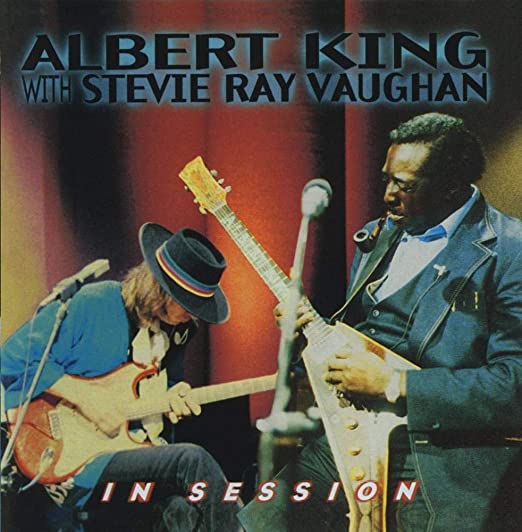
Albert King and Stevie Ray Vaughn. Vaughn was reverential, but he also came to play. King does Stormy Monday, and then Vaughn lights up Pride And Joy, on fat black 45 rpm plastic.

Bromberg's How Late'll Ya Play'Til? 1976 is another lost gem that more people should hear. A double album with one studio record and one live record, it might be the most stylistically sweeping statement of musical ability across genres available. On the live blues sides, the band is hot and Bromberg is having a ball.

These things have to end somewhere, and that somewhere this time out, is Savoy Brown, side one of Blue Matter 1969. The brief union of Kim Simmonds with Chris Youlden made for some fine blues from Savoy Brown. Youlden's solo career never really took off, and Simmonds has soldiered on impressively, but the two of them together were unique.