Tuesday, February 14, 2012

The Fame Studios Story 1961-1973 2011

I'm a terrible sucker for the soul box set/compilation. I've reviewed quite a few in the past here and here.

So now this one comes along, and you know it's a great story. The Fame studio in Muscle Shoals, Alabama, was one of the preeminent purveyors of that funky, gritty soul style our U.K. friends like to call Southern soul, or deep soul, in sharp contrast to the slicker, smoother sounds coming from up north in Motown and Philadelphia. 

Rick Hall is the man. He made the sound his signature, he hired fabulously talented house bands that provided the rhythm for most of the featured artists. He also regularly used some of the best writers available, with George Jackson, Dan Penn and Spooner Oldham among them.

Add the singers- Arthur Alexander, James and Bobby Purify, Arthur Conley, Clarence Carter, Wilson Pickett, Candi Staton, Mitty Collier, Otis Reddding- and you've got the recipe for a hit-making palace. A funky-looking cinder-block palace with all the exterior appeal of the warehouse the building had been before Hall turned it into a studio. All of those great singers are featured here, but so are many lesser-known artists that give no less riveting performances.

It's three CDs with a built-in booklet that includes an excellent history of Hall and his studio, an in-depth discussion of the signature sound of that studio, and a track-by-track narrative that is the rival of any product in the box set category. It's what I've come to expect from the Kent label, an English reissue company committed to unearthing everything soul and every sub-genre of soul possible. These guys released an entire CD of Vietnamese soul (no, I don't have that one). They released the four volumes of Dave Godin's Deep Soul Treasures Taken From The Vaults, the most remarkable treasure trove of lost soul classics you (or I) can imagine.

They did a stellar job putting this one together. There are a few familiar songs, but this isn't a product meant to provide you with a greatest hits/chart-toppers sort of package. Rather it does its intended job of showcasing the sound of one of America's most famous studios in fine fashion. And the studio is worthy of this deep investigation, because it, and Hall, leave their mark on every song. There are also several interesting never-before released selections (Otis Redding accompanying himself on guitar on a demo of You Left The Water Running, anyone?), and a few surprises as well. The third CD features a few non-soul acts that came to benefit from the sound of the place. This may upset a few purists, but they need to lighten up.

If you still enjoy buying music that comes with well-thought out packaging and supporting material, here you go. If you just love deep, Southern soul and want to discover a few new artists or songs in the genre, here you go. If you need research material to write a thesis for a music appreciation class with an open-minded professor, here you go.
Tuesday, February 7, 2012

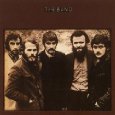
The Band

It's a bit of a surprise that I haven't yet dedicated an entry to The Band. I've mentioned them a few times, but I've done pretty big career overviews of Robert Palmer, The Sons Of Champlin, Van Morrison and The Beatles. It seems like I should have gotten to The Band.

Let's make sure we understand each other. This will not be an unbiased review of the artists' output. I loved their first four records. At the time they were released, I would have been less your friend if you dissed them (although we didn't say "dissed" back then).

I'm not sure what to say about Music From Big Pink 1968. It is everything anyone you read says it is. There's a million reviews and old print articles archived. This record is the meaning of the musical term (coined thirty years later) Americana. It is country, R&B, blues, New Orleans funeral march, bluegrass, and Buddy Holley rock 'n' roll wrapped up in a blue plate special for your ears. The stoming piano-driven rock of To Kingdom Come,  the funky country stomp of Calidonia Mission, the ensemble lead vocals of We Can Talk, the lead guitar and pulsing R&B of This Wheels On Fire, not to mention The Weight ("take a load off, Fanny") and Garth Hudson's amazing organ opening to the rocking ode to frontal anatomy that is Chest Fever. The record never stops.

From there came The Band 1969, with Up On Cripple Creek, Across The Great Divide,  The Night They Drove Old Dixie Down, Rocking Chair, The Unfaithful Servant, and King Harvest (Has Surely Come). And every other song on the record. If you haven't heard this record, you can't really fully understand American rock and roll. Don't buy that crap? Go listen to it.

Their third, a disappointment to some, and even I must admit that side two is what really makes it, is still the group living up to their potential, and a fine record. Stage Fright 1970 side one feels like treading water, and Todd Rundgren's slightly sterile engineering doesn't help. Strawberry Wine and Time To Kill sound great today, and the recording is especially good on Levon Helm's drum kit. Side two is just a classic. The final three tracks, Daniel And The Sacred Harp, Stage Fright, and The Rumor are well worth the price of the record or CD. The Rumor is just beautiful.

1971's Cahoots found the band stretching out, and not everything worked. But enough of it did, and Life Is A Carnival, 4% Pantomime (with Van Morrison), and Where Do We Go From Here? were particular highlights. The River Hymn is another classic.

If there is a hallmark to this group, it is their organic sound. Levon Helm's drums always sound just a little like sticks on cardboard, Richard Manual's piano sounds like a small upright in someone's parlor, the reedy twang of Robbie Robertson's Fender Telecaster, always without effects, the high lonesome tenor of spot-on bassman and vocalist extraordinaire Rick Danko, and the deeply American sound of Garth Hudson's Hammond B3 organ.

In 1972, The Band made Rock Of Ages, one of the best live double-LP packages you can find anywhere. Adding horns arranged by Allen Toussaint, the live performance is exquisite. The 2-CD reissue contains the entire concert, including Bob Dylan's four-song set with the group.

After those first four studio recordings, things get dicey. 1973's Moondog Matinee finds The Band biding time with covers of oldies rock and roll from the (mostly) fifties. It's fine, but dispensable. Their last two, Northern Lights, Southern Cross 1975 (with at least a few good ones-Acadian Driftwood and It Makes No Difference) and Islands 1977 were mostly unnecessary. But those first four, and especially the first three, remain classics today, and you can hear today how different they were from their contemporaries.

1978 saw The Last Waltz, the soundtrack of the movie by the same name, that documented their star-studded farewell concert. It has it's moments.

The group resumed in 1983 without founder-songwriter Robbie Robertson, and I've heard at least some of the three records they released. It's sadly not the same. All of the members have made solo recordings, and of those, Helm's have been the most successful. Robertson seems content to confound his listeners at every turn, and hell if he's ever going to do anything that sounds like the band that made him famous.

Own the first three. If you're too young, think of it as a music history lesson.

Wednesday, February 1, 2012

Christmas 1969

My oldest brother recently started reading this blog, and it reminded me of an ages old Christmas musical moment. I have two siblings, both older brothers. My middle brother (for lack of a better term) is 2 years older than me, and my oldest brother is 6 plus years my senior. In 1969, my oldest brother left college to play bass guitar in a famous one-hit wonder rock band, and he was touring and did not get home for the holiday. 

But he sent presents home. He sent me and my middle brother one gift- a package that contained exactly seven record albums for us to share/divide. Now if you know anything about sibling rivalry, you'll understand how twisted this move was. Seven is a hard number to divide two ways, and sharing things is not the strong suit of adolescent brothers (we did date the same girl once, but not at the same time). I honestly don't remember the outcome, and I know we didn't really fight about it, but it was a dilemma on which we no doubt spent hours and hours of deliberation. We were, after all, 14 and 16 years old, so what else did we have to do? I know that I ended up with the Band and The Sons Of Champlin records eventually. They're in the living room now.

Do I remember all seven of the titles? No, I do not, but I sure wish I did. This blog post would be way better if I remembered them all. I do absolutely remember four of them, and they were Music From Big Pink 1968 by The Band, Cream's Wheels Of Fire 1968, the first Dr. John "The Night Tripper" album, Gris-Gris 1968, and The Sons Of Champlin Loosen Up Naturally 1969. I think two of the  other three were Procol Harum 1967, and Mother Earth, with Tracy Nelson singing her signature "Down So Low", on Living With The Animals 1968, but I really can't be sure.

Two of those records, Music From Big Pink and Loosen Up Naturally were the opening salvos from bands I would follow for the rest of their careers. The Band is one of my all-time favorites, and The Sons come pretty close. The Gris-Gris album was and is a trip to the (swampy New Orleans) beach . Let's just say it is not the Dr. John of Right Place, Right Time fame. This is much darker terrain. And what can I say about Wheels Of Fire? Not a great Cream record. Either that, or their best. It's definitely eclectic, and you don't get many times to use that oft-overused term accurately these days.

I was already way into music, but it was one hot bundle o' wax. I certainly don't remember any of the other presents I got that year.

Monday, January 30, 2012

Sanford-Townsend Band Smoke From A Distant Fire 1976

This record was first released as The Sanford-Townsend Band and later re-released as Smoke From A Distant Fire by Sanford and Townsend when that title song hit the Top 40. While it is quintessentially a 70s record, it is also a hook-filled dancing dream, and finely crafted product that fits perfectly between Hall and Oates and Loggins and Messina. No irony there.

Smoke From A Distant Fire is pure classic white soul with an ever-so-slightly country feel. Along with Smoke..., the record boasts Shake It To The Right (funky in a very friendly way), Oriental Gate (an effective slow-building Southern rock ballad), Squire James (Burn Down The Mission by Elton John, in a good way), Lou (a lovely ballad),  and In For The Night (southern funk with another marvelous vocal). I'm not sure if its Johnny Townsend or Ed Sanford with the Daryl Hall tenor, but they're impressive pipes either way. 

There are some weaker moments, and the whole thing has that super-clean, note-perfect gloss that feels almost just a little too right. But give in to your inner pop voice: this is well-written, intricately arranged, beautifully sung, perfectly played pop-rock. Guilty pleasure? Absolutely. Too slick? Certainly a possibility.

Tuesday, January 24, 2012

Spinning Vinyl

It's been a little while since I last took up the occasional Spinning Vinyl series. The other night I got to fire up some records, and I had a fine time. Maybe these will stir a memory or make you curious. I started the night clearly inspired, as I slapped I'm Bad, I'm Nationwide by ZZ Top from Deguello 1979 on the turntable. A great song, one of my favorites from ZZ Top. Next up was John Mayer with Something's Missing from Heavier Things 2003, another very different take on the blues. Then I had one of those ideas, and it was on to Cat Food by King Crimson from In The Wake Of Poseidon 1970. Feeling a little random play about things, I skipped ahead to You Got Yr. Cherry Bomb from Ga Ga Ga Ga Ga 2007 and The Mystery Zone from Transference 2010, both by Spoon.They are a very talented bunch.

Life On The Moon and To The Stars from We Will Become Like Birds 2005 by Erin McKeown followed, and there's another just fabulous record, McKeown firing all all cylinders, and a finely crafted rock production to boot. Another quick left turn brought Turn My Life Down From Volunteers 1969 by Jefferson Airplane. I was never a big Airplane fan, but Turn My Life Down struck a chord with me, and it has remained with me every since. Next up I took a break from jumping up and down and listened to all of Side One of Shame Shame by Dr. Dog: Stranger, Shadow People, Station, Unbearable Why, and Where'd All The Time Go? I remain enthralled with this record, and they have a new one due out soon.

From Side Four of The Beatles White Album 1968 I spun Savoy Truffle and Cry Baby Cry. Then it was Brian Auger and Julie Tippetts Encore from 1978, a very cool record that reunited one of the most creative jazz-rock duos ever, whose mid-sixties work was just crazy, and well ahead of its time.  Git Up, a cover of Steve Winwood's Freedom Highway, and Auger's Future Pilot all sounded good, and Julie's voice is a thrill. From there it was on to The Who, My Generation and The Kids Are Alright from My Generation 1965, The Moody Blues Go Now from Go Now The Moody Blues #1 1965, Allen Toussaint's Yes We Can from Holy Cow! The Best Of Lee Dorsey 1985, and Burning Spear's Live Good from Marcus Garvey 1975 (classic reggae-where'd that come from?)

Do Nothing Till You Hear From Me Boz Scaggs from Speak Low 2008 is a lovely reading of the classic by Boz, who has lost nothing as he has mellowed. Soul Kiss from Joe Jackson's Big World 1986 (one of Jackson's better outings by my take). As the night drew to a close, I dug a deep groove with the extended version of Funky Drummer, from James Brown's In The Jungle Groove 1986 (but recorded with the great Clyde Stubblefield in 1970). And finally, I listened to Alcohol and Complicated Life from Muswell Hillbillies by The Kinks 1971. "Gotta stand a face it, life is so complicated". Seems like anybody could write it, but Ray Davies is the one who made it work. Ray Davies was really writing back then. Between 1968-1971 he could do no wrong.

So that's how I spent my evening a few days ago. No rhyme no reason, just my mind on random play and a big stack of records.

Thursday, January 19, 2012

Keb Mo The Reflection 2011

Keb Mo has made some good ones over the years. His 1994 debut modernized acoustic blues just enough to made it a hit, but still keep it real. Slow Down 1998 and Keep It Simple 2004 were both good examples of laid-back electric blues grooves coupled with Mo's simple and heartfelt vocals. There have been some questionable moves, notably Peace...Back By Popular Demand, also 2004, where Mo covers mostly sixties hippy movement classics.

This new one is really a nicely made record, well-recorded, with a crack ace band, but the whole thing comes off like "smooth blues", as in "smooth jazz". Mr. Moore has always been laid-back, but previously that meant he brought to mind those fine Clapton albums from the late seventies that sound so great even today. This one is more like a smooth jazz record than anything else, and I'm a tad surprised by this much pablum from Mo. Sure, you knew he could go there if he wanted, but you didn't really expect him to do it.

Now if smooth blues sounds like a good idea to you, I think you're in for a treat. There are several good tunes here, Mo's voice is in fine form, and Whole Enchilada, Inside out, All The Way, and the India.Arie duet Crush On You are all standouts, with funky slap-bass, horn charts and hooky choruses keeping things interesting. My Baby's Tellin' Lies and Just Lookin' feature funky rhythms and good lead guitar from Mo.

The record has several lyrical low points, including the overly-sentimental We Don't Need It and Something Within. And there are some pretty boring tracks musically as well. My Shadow is reminiscent of Gaucho-era Steely Dan, and not in a good way. The title track is quite the least interesting of all, a too-mellow pop ballad without drama or a hook. A cover of the Eagles One Of These Nights does not work at all, unless you're grocery shopping at the time you hear it.

My first couple of times through it, I enjoyed the record, but I wasn't really paying that much attention. If you don't have Keb Mo 1994 or Slow Down 1998, buy those. If you enjoy smooth jazz artists and want to dip your little toe into a mildly bluesy sound, this new one is for you.

Thursday, January 12, 2012

Shopping Trip

I had the good fortune of visiting the Bay Area recently, as I have frequently for several years. I went back to my very favorite haunt, the Amoeba store on Haight St. I'm not sure when I'll get back, so I gave myself permission to buy whatever struck my fancy. I stayed in the vinyl sections of the store, because to add CDs would make the visit take all day.

It turned out to be an interesting and varied motherlode of fine tunes. I've already discussed the Live Mott The Hoople, but I also picked up three 12-inch EPs by XTC, The Mayor Of Simpleton, Five Senses (both including swell tracks not on any LP), and Love On A Farmboy's Wages, which includes live versions of Burning With Optimism''s Flame and English Roundabout that are marvelous.

I grabbed an older M. Ward record, End Of Amnesia 2001, a reissue of Superchunck's 1994 outing Foolish, Matthew Sweet's most recent, Modern Art 2011, and Dave Alvin and the Guilty Women 2009, which also features the lovely voice of Christy McWilson throughout.

And then there's the Proclaimer's classic Sunshine On Leith 1988, which I already owned on CD, but the vinyl  was pristine, and I really love this record. I suppose 2001's Persevere is still my personal favorite, but Sunshine On Leith is darn close.

I've made my way through all these new records once (I did spend more time with the Mott), and hopefully I'll have more to say about some of them down the road. It's all been good, but I haven't been keeping track. Lazy listening, I do love that.

By the way, that list of Popular Posts over there on the right lists the more frequently hit posts during the last thirty days. Frank Zappa's Chunga's Revenge has gotten more traffic than almost anything I've ever posted. Go figure.