Saturday, March 26, 2022

Ten Years After

Ten Years After were early English blues enthusiasts that, along with John Mayall, Yardbirds, Chicken Shack, early Fleetwood Mac, Cream, and others, took the American export and repurposed it for the rock market. Ten Years After had the lightening fast guitar hero in Alvin Lee, but the whole band were a talented group that could drive a blues riff into your head with sustained vigor.

They managed nine records in the UK top 40 (four top 10) and six in the US top 40. US sales improved after the release of the movie Woodstock, which featured Ten Years After's I'm Going Home in a smoking hot performance. They toured extensively and had one top 40 single in the US, the somewhat out of character I'd Love To Change The World in 1971.

Their eponymous debut from 1967 is a hot number that includes solid versions of Willie Dixon's Spoonful, Sonny Boy Williamson's Help Me, Al Kooper's I Can't Keep From Crying, Sometimes, and several good ones from Alvin Lee's pen. Keyboardist Chick Churchill gets a highlight on Adventures Of A Young Organ. It is a strong debut, showing off the bands many strengths and displaying just a bit more jazz influences than most blues-rock of the time.

Next up was the live Undead 1968. The live setting shows off Lee's hot guitar chops and snarling vocals, and the whole band cooks. A hot version of Woody Hermann's Woodchopper's Ball and the first recorded version of I'm Going Home (in a modest six-minute version) are highlights. The original's five songs are nicely augmented by four extra tracks on the 2002 CD reissue.

Stonedhenge 1969 is a studio album written entirely by Alvin Lee and the band members. Beside some strong songs from Alvin Lee, including the jazzy shuffle Woman Trouble, the slow blues of A Sad Song, the driving Speed Kills, and the rocking I'm Going To Try and Hear Me Calling, each other member gets a feature. Drummer Ric Lee does a drum solo version of Three Blind Mice, and keyboardist Chick Churchill and bassist Leo Lyons both perform solo pieces as well. It is almost there, but Alvin Lee's best songs are yet to come, and the solo band member's features could have made room for more rocking.

1969 also saw the release of Ssssh, one of their better records overall, and the beginning of their run of solid studio outings. I reviewed it here back in 2014. All eight tracks are strong, and Lee snarls out the vocals and plays lightening fast runs on the guitar while one of the best driving rhythm sections in blues-rock just push the songs into your ears. The rockers Bad Scene, Stoned Woman, Good Morning Little Schoolgirl, The Stomp, and Woke Up This Morning never let up, while Two Time Mama features nice acoustic guitar, and If You Should Love Me is a strong mid-tempo ballad.

We are into the best period for the band, and Cricklewood Green 1970 continues and expands on the excellence of Ssssh. The rockers here are all solid, including organ and guitar driven Sugar The Road, the driving Working On The Road, the seven-minute showcase 50,000 Miles Beneath My Brain, the hit single, stomping Love Like A Man, and the slow burn of As The Sun Burns Away. Add to that the jazzy Me And My Baby, and one of Lee's better ballads, the haunting Circles, and you've got a sure winner. It is easy to see how it was their highest charting record.

1970 also saw the release of Watt. It is hard to believe that Watt came out between Criclewood Green and A Space In Time, two of their best records. The singing and playing are all fine, but the songs are just not as strong as either of those other two. It sounds like Alvin Lee needed more time to write some better ones, so these could have mostly been the bonus tracks on the reissue thirty years later. It's not terrible, but it is almost entirely unnecessary, especially compared to their best work. 

A Space in Time 1971 saw the band broaden their sound with more acoustic guitar, and even strings on Over The Hill. The single I'd Love To Change The World was their biggest hit, mixing acoustic guitar verses with searing leads on the chorus and breaks. It's killer, but not really like much else they had done, and was rarely performed live. And while the album features more ballads and mid-tempo material than usual, there's solid rock here too with One Of These Days, Baby Won't You Let Me Rock 'n' Roll You, I've Been There Too, and Let The Sky Fall. The record plays well, and is consistently strong.

1972 brought Rock And Roll Music To The World, and they continue to offer their driving blues-rock they had become known for by now. Strong songs include Standing At The Station, Choo Choo Mama, You Give Me Loving, and the boogie title track. Some of the rest feels less fresh, and the limits of Alvin Lee's songwriting shows up again as it did on Watt.

1973 saw Recorded Live, a respectable live recording with some questionable song selections, including the I Can't Keep From Cryin' Sometimes/Extension on One Chord jam that takes up all of side three. Everything is done to the nines, and yet the album doesn't feel all that cohesive. There's good versions of One Of These Days, You Give Me Loving, Good Morning Little Schoolgirl, Choo Choo Mama, and I'm Going Home (again).

Positive Vibrations 1974 was released just before the band broke up, and as such probably didn't receive much record company push. A mix of hard rockers and a few mid-tempo numbers, it's a pretty good one overall. Rockers Nowhere To Run, Going Back To Birmingham, It's Getting Harder, You're Driving Me Crazy, and I Wanted To Boogie are all quality Ten Years After, and most of the material holds up well. But Alvin Lee had one foot out the door, and the record only made it to #81 in the US, and didn't chart in the UK at all.

Alvin Lee continued on as a solo act and with bands Ten Years Later and The Alvin Lee Band. He made a dozen studio solo records between 1973 and 2012. In 1989, he reunited with the original members for About Time, a decent record with some good songs and some weak ones, and the band sounds good. It suffers from Lee's guitar sound, that over-driven, pure tone heard on Boston and Journey records of the same time period. Lee's guitar sound in the seventies was always a bit more organic. They toured together off and on until 2003 when Lee left and the band replaced him with Joe Gooch, with whom they recorded several more albums. Alvin Lee died in 2013 from complications from surgery.

When they were hot, they were hard to beat. They deserved more fame than they achieved. Their debut is a landmark given that it came out in 1967. Ssssh and Cricklewood Green are the bomb, the pinacle of their work, and A Space In Time is excellent. Positive Vibrations is a strong swansong, and should have sold better.

Sunday, March 20, 2022

Marti Jones Match Game 1986

Marti Jones didn't make any bad records. Any and all of her releases are worth your coin, and most of them are excellent displays of carefully chosen, well-written folk-pop mixed with the best of Don Dixon's writing credits, and also Dixon's most attentive productions. After her 1985 debut Unsophisticated Time featured that exact formula to near perfect results and limited sales, they tried one time to make a rock record.

And what a record it is. Unlike any of her records (although the excellent Live At Spirit Square also rocks at times), Match Game is singular in it's rocking, and yet maintains the organic sound that Dixon applies to all of her recordings. This is especially important because it was 1986, and this record eschews the slick sound of the eighties (think Pat Benatar), and instead sounds like those fine Bowie and Mott analog recordings of the early seventies.

The record includes premiere songwriting throughout. Dixon brings his Be Myself Again, Touch Tone, and Inside These Arms, all solid efforts. And then there's Bowie's Soul Love (a wonderful version), Dwight Twilley's Chance Of A Lifetime, Elvis Costello's Just A Memory, Paul Rogers' Soon I Will Be Gone, Marshall Crenshaw's Whenever You're On My Mind, Liam Sternberg's Crusher, John David's It's Too Late, Reed Nelson's We're Doing Alright, and Robert Barone's Foolish Lies. The record is a study in great songcraft.

And then there's the guest list of musicians: Mitch Easter, Ricky Bird, Darlene Love, Vinnie Zummo, Treva Spontaine, Marshall Crenshaw, Robert Crenshaw, Paul Carrack, T-Bone Burnett, Micky Curry, Rick Ford, and of course Don Dixon. Every note is in place perfectly. And Dixon's production captures it all in vivid, analog glory.

Lest we forget, there's Marti's clear, beautiful alto voice and inspired use of said instrument to illuminate every lyric. More forceful (yet still somehow casual) on many of these songs than on much of her material, it brings out the best in her.

There is not another record quite like it. Not just in Marti's oeuvre, but anywhere really. I didn't remember it when I made a list of perfect records, but that was my omission, and a terrible mistake. One of my favorite artists in a singular moment early in her career.

Sunday, February 27, 2022

The Grateful Dead

I suppose I should open with a disclaimer before I hear all kinds of noise from serious Deadheads. I'm not a serious Deadhead, or anything close, I don't own all their records, and there's many of them that I used to own that have been removed from the stacks. But I like some of their music a lot.

Overall I think of them as having a less than stellar recording career. I tend to like studio records more than live ones, and the Grateful Dead struggled to make the most of their studio time. More on that after I very briefly deal with their recorded live legacy.

The Grateful Dead made a lot of live records, and if you include the retrospective releases, the number is quite staggering. I know Deadheads that swapped tapes and talk about this show or that show as classics, but I just don't have the time to listen to three years of Dead shows to find the great ones. I like Live/Dead 1969 a lot, and the Dark Star/St. Stephen/The Eleven medley that takes up the first three sides is very fine. I also liked Grateful Dead (Skull and Roses) 1971, which included two sides of concise tunes that feature a super hot band and great songs. Europe '72 is a solid and sprawling 3-LP set featuring more acoustic guitar driven versions. After that I never felt like I needed more live material, although I do own a few of the retrospective releases on CD, and they document good shows. The trouble is finding the ones you might want in an overwhelming sea of choices.

Back to their studio work. The early records never quite did it for me. Grateful Dead 1967, Anthem of the Sun 1968, and Aoxomoxoa 1969 are all generally well regarded, but only Aoxomoxoa ever really impressed me. I'm not a huge blues fan, and much of their work is blues twisted around folk and psychedelia that just doesn't connect with me. Your results may vary. While I'm delving into their lesser studio work, let me just say that most of what they did in the studio is disappointing. They made a total of thirteen studio records (fourteen if you count Ace- see below) from Grateful Dead 1967 to Built To Last in 1989. Everything after 1976 is less than terrific- Terrapin Station, Shakedown Street, Go To Heaven, In The Dark, and Built To Last. These records aren't terrible, but there always seems like something is missing. The 2015 2-CD The Best of The Grateful Dead on Rhino is a fine collection that touches on all of their studio recordings, and is as good a sample as one could expect.

So which records are worthwhile? Well, 1970 was a good year, producing both Workingman's Dead and American Beauty, what I would say are their two best studio records. Both feature a lot of acoustic guitars and folk/country/blues sounds, and both include stellar songs. American Beauty had the hits with Truckin', Sugar Magnolia and Friend of the Devil, and also maybe their most beautiful song lyric, Ripple. Workingman's Dead is my vote for their best work, with Uncle John's Band, Casey Jones, Easy Wind, Dire Wolf, and Cumberland Blues, and not a single clunker. Consistently solid clear through. 

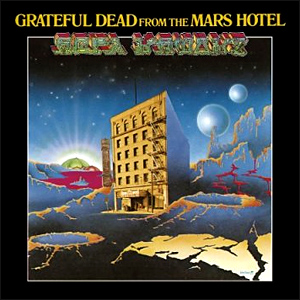
That just leaves 1972-1975 left to discuss. Both Wake Of The Flood 1973 and Blues For Allah 1975 have moments of brilliance. Both also see the band's sound branching out into jazz and world music influences, and both sold quite well. I bought them both when they came out, and purged them both many moons ago. They're not bad, but they're also not their best work. Two more from the early seventies do qualify with their best work. The first is From The Mars Hotel 1974. It contains many great songs and relatively upbeat performances with U.S. Blues, Scarlet Begonias, Unbroken Chain, Pride of Cucamonga, and Ship Of Fools. It is hard to believe that it came between Wake of the Flood and Blues For Allah, as it is a pretty straight forward rock record between two seemingly odd diversions. And that leaves only Ace 1972, Bob Weir's solo debut, but a Grateful Dead record in all but name only. And a mighty fine one at that. Packed with great songs Playing In The Band, the lovely Cassidy, the humorous Mexicali Blues, the rocking Greatest Story Ever Told, and frequent live staple One More Saturday Night.

So, here's my personal best of their studio work, ranked in this order: Workingman's Dead, American Beauty, Ace, and From The Mars Hotel. For live material, I'm partial to Grateful Dead (Skull and Roses) and Live/Dead (interestingly, their first two live releases).

There are no less than 165 (!) retrospective live recordings to choose from including the Dick's Picks series, the Road Trips series, the Dave's Picks series, and some seventy one-offs released between 1991 and 2022, not including six others released while they were still together. So if you're really interested (or crazy), you can fill your head with live performances from throughout their 20 year career, and decide for yourself which version of Dark Star is the best.

Tuesday, February 22, 2022

The Hollies The Hollies Greatest Hits 1973 and Hollies Live (Hollies Live Hits in the UK) 1977

Between 1966 and 1974 The Hollies had 6 top 10 singles in the US, and 12 in the top 40 (1966-1983). They were even bigger in the UK, where they had 18 top 10 singles and 29 in the top 40, between 1963 and 1988. As British Invasion groups go, they had a lot going for them. Lead singer Allan Clarke with harmonies from Tony Hicks and Graham Nash made them one of the stronger vocal groups, and the three were also quality songwriters, although they recorded many songs from other writers. The 1973 Greatest Hits contains all of their top 10 US singles except 1974's The Air That I Breathe (which was added to the 2002 reissue). So you get Carrie Anne, Bus Stop, On A Carousel, Long Cool Woman In A Black Dress, He Ain't Heavy, He's My Brother, Just One Look, Pay You Back With Interest, Look Through Any Window, Stop, Stop, Stop, and several more. It is packed with great songs, and spectacular harmony singing. Even when Nash left in 1969 to form CSN, Terry Sylvester was clearly up to the high harmony parts that Nash sang.

Hollies Live 1977 (with a different cover and titled Live Hits in England) is a very well recorded live album that includes several songs from the four years between these records. The Air That I Breathe is here as well as Springsteen's 4th of July, Asbury Park (Sandy), Another Night, I Can't Tell The Bottom From The Top, and I'm Down. There are seven songs that are on both records, so they are not nearly identical, and both have lots to recommend them. The original singles on Greatest Hits are all classics, and include Graham Nash's distinctive, slightly nasal high register that has a certain indisputable magic. But again, Sylvester can also hit all those notes, and the tight ensemble playing and more recent songs on the live set show a band that wasn't yet ready for nostalgia in 1977.

You can't go wrong with either of these. Both are currently available in vinyl and CD versions.

Tuesday, February 8, 2022

A Funk Excursion

A few weeks ago I fell into a funk.

Not the depression thing, but the musical kind.

It all started when I pulled out Disc 2 of James Brown's 4-CD box set Star Time from 1991. I still believe it is the best single artist 4 CD box set. And if you want the funk, here comes Papa's Got A Brand New Bag, I Got You (I Feel Good), Ain't That A Groove, Cold Sweat, I Can't Stand Myself (When You Touch Me), Give It Up Or Turnit A Loose, I Got The Feelin', and I Don't Want Nobody To Give Me Nothing (Open Up The Door I'll Get It Myself).

After that I had to find more. So I went to the LP stacks looking for P-Funk. And I found, and listened to in their entirety, Funkadelic's One Nation Under A Groove, Uncle Jam Wants You, and Parliament's Mothership Connection. All three of those are first rate, and not just for the famous tracks. That led me to Parliament Gold, a 2 CD compilation that hits the high spots in the Parliament oeuvre. Two CDs is a lot of Parliament, even for the devoted. Despite the two bands essentially being the same musicians, I tend to like the Funkadelic records more overall.

Since I had gone down this funky rabbit hole and wanted even more, I pulled out The Funk Box, another 4 CD box from 2000 that is almost flawless. Of course if you are a certified funketeer, it might seem like an introduction, but it includes a lot of great funk from across a wide spectrum of artists. From James Brown's Get Up I Feel Like Being A Sex Machine and Aretha Franklin's Rock Steady to Rick James' You And I and Zapp's More Bounce To The Ounce, the hits are here alongside some less well-known fare. One thing that is especially nice about this box set is that they consistently use the original 12" dance singles or the extended album versions and not the edited for radio singles that shorten the jams. Over the course of a few days, I listened to the whole thing. 

I'm not sure how I got into funk like I did. I always liked soul music, but I was defiantly anti-disco, and there are some clear links between disco and funk. I wasn't really into funk when it was happening in the seventies and eighties. Instead I came late to the party. It was probably that James Brown box set that got the whole thing started, just like it started this recent trip down funky memory lane. Tear the roof off the sucker!

Saturday, January 15, 2022

Jackson Browne

Jackson Browne has had an interesting career, and has been willing to wear his heart (as well as his politics) on his sleeve, mostly quite admirably. His early records in the seventies set a romantic singer-songwriter blueprint that Browne has rarely followed since. His eighties output suffered not only from cumbersome political lyrics but tragic eighties "updating" of his sound and production, overusing all of the awful eighties trends of synthesizers and slick studio tricks. Since the nineties, his records have been a mixed bag of styles and lyrical focus, all professionally crafted, and if not quite the equal of his early work, certainly better than his eighties missteps.

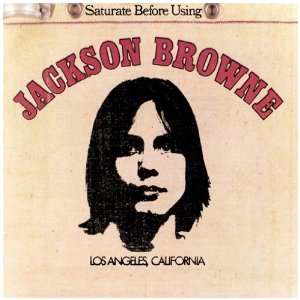
It is hard for me not to think of his first five records as the pinnacle of his career, but in retrospect I find this opinion a little too forgiving. I love the debut, but For Everyman 1973 and The Pretender 1976 are not as strong as Jackson Browne 1971, Late For The Sky 1974, and Running On Empty 1977. 

Jackson Browne is very nearly perfect. Great love songs, tragic heartbreak, and even some light rockers. Introspection rarely comes off this well. It has aged remarkably well, thanks to the near-perfect production using only those elements required by each song. My brother, a professional bass player himself, remarked that "Leland Sklar gives a master class in how to play high register melodic, complementary bass lines". So there's another reason to pull it back out and listen again.

For Everyman 1973 comes very close. We didn't need another version of Take It Easy, and the trite take on pregnancy of Ready Or Not are not golden moments. I still can't decide if the rocker Redneck Friend helps things, but I suppose when you write so many slow songs, when you get one to move, you'd best record it. These Days, For Everyman, and most of the rest sound like a continuation of the magic of the debut. This is where Browne's longtime association with David Lindley begins. Lindley's steel guitar and violin will become hallmarks of Browne's sound for years to come.

For me at least, Late For The Sky 1974 is Browne's most fully realized work. It's a break-up record for sure (all of side one), but it also includes Browne's post-apocalyptic warning Before The Deluge, his tribute to a lost friend For A Dancer, and two of his better rockers The Road And The Sky and Walking Slow. Every song a winner, this doesn't happen very often no matter who you are.

Something happens on The Pretender 1976 that infects nearly all of his work to come. Mostly gone are the delicate acoustic arrangements in favor of a middle-of-the road soft rock. Browne's gift for melody is very real, but we can hear him reusing previous ideas and patterns. The lyrics are still good, and the title track is a classic song of acceptance (you can almost see the seventies hippies running out to buy SUVs), but the record's overall impact is slight, and it hasn't aged particularly well.

 Which brings us near the end of the seventies, and Running On Empty 1977. Recorded live on stage and in hotel rooms, backstage, and on the bus, the record is unique and special in several ways. A brilliant and casual record, it became the most successful record of his career. Solid rockers (the title track, You Love The Thunder) mix with introspection and road observations until the lovely The Load-Out/Stay medley ends the record on a high note. 

Enter the eighties, and Jackson Browne gets his sound brought up to the current (and dismal) eighties standard. Synths, ultra-clean (sterile) studio sound, big drums, and Browne's least interesting lyrics make for one tragic mess. That Hold Out 1980 is his only chart-topper is sad commentary. Lots of folks ran out and bought the studio follow-up to The Pretender, because it certainly wasn't the reviews that made it a hit.

Browne's next three records, Lawyers In Love 1983, Lives In The Balance 1986, and World In Motion 1989 all have similar if not equal flaws. All are guilty of some of Browne's lazy melody writing, and the political sentiments (especially on the last two) help to make for some awkward lyrical moments even if you agree with Browne's liberal politics. Lawyers In Love had several solid singles, and Lives In The Balance had a moment (In The Shape Of A Heart).

In 1993, Browne returns to the fragile heart with I'm Alive, equaling his best work from the seventies for the last time in his career. Inspired by his ugly break-up after nine years with Daryl Hannah, the record is just about perfect. The eighties sheen is gone from the sound, and Browne writes his most inspired collection of songs in a long time. Every song a winner. Not many artists do it, but with this one, the debut, and Late For The Sky, Jackson Browne does it three times.

Looking East 1996 finds Browne back at political observation for most of the set. The Barricades Of Heaven is good, and there's a few others that are worth hearing. It's an improvement on his eighties work, but that's a pretty low bar. 

2002 brought The Naked Ride Home, and although a mixed bag, it is mostly strong. Bookended by the killer title track and My Stunning Mystery Companion, what lies between is mostly solid. 

Next up is Solo Acoustic Vol. 1 2005. On this set, as on Solo Acoustic Vol. 2 2008, Browne returns to his catalog and does a fine job of selecting classics mixed with the better work from his more recent output to fine effect. With just Browne and either acoustic guitar or piano, it's an intimate affair. I prefer the more developed original arrangements (especially on his early work), but these are nicely recorded acoustic shows, and Browne's songs hold up well in stripped down versions. 

2008 also brought Time The Conqueror, another blend of political commentary and a few personal tales. The music is good, if not anything particularly new, and we can begin to feel like Browne has run out of new ideas, even if he's pretty good at recycling the old ones. Let's call it Looking East Volume 2.

Standing In The Breach 2014 doesn't rock the boat too much, but it still sounds better than he has in a while. The title track, The Birds Of St. Marks, The Long Way Around, and Here (a single from 2009) are all above average, so a pretty good one overall.

Finally, we have Downhill From Everywhere 2021. You can be impressed that he's still at it, and enjoy one that is better than anything since I'm Alive. It doesn't have that record's consistent theme, but it has his most inspired set of tunes in a long time, and a little bit of rocking with the title cut and the humorous My Cleveland Heart. The other songs find Browne working his craft and working hard at not sounding the same all the time.

You have to admire his tenacity at keeping it going, and his willingness to address political issues despite what that may have done to his sales over the years. His voice has never lost anything, and his convictions remain strong. As a songwriter, he has repeated himself more than a few times, but so has every other songwriter with as much output as his. His live shows remain popular, and there are plenty who will gladly listen to his newer material for a chance to hear him do his early classics. Not many artists have made as many perfect ones as Jackson Browne.

Tuesday, January 4, 2022

The Best of 2021

Erin McKeown Kiss Off Kiss

Another outstanding outing from Ms. McKeownFeaturing her pop sensibilities, a good band, and production from Steve Berlin.

Silk Sonic An Evening With Silk Sonic

Bruno Mars and Anderson.Paak channel seventies soul in the best way possible. One sweet groove after another.

Del Amitri Fatal Mistakes

The Dels return, and it's almost like they never left. A great overlooked Scottish band gives us one more gem.

Melody Gardot Sunset In The Blue

Sensual, as usual.

Irma Thomas Love Is The Foundation

A mature soulful voice that has done plenty of great singing gives us the record of her lifetime, which is saying a lot. Technically it came out in 2020, but it was the best record of the year whenever it was released.

St. Vincent Daddy's Home

One of the more creative voices in rock today does it again. She never repeats herself, but you always know it's her. That Jack Antonoff guy is one hit making machine.

Robert Plant & Alison Krauss Raise The Roof

These two are so great together, it is lovely they decided to do it again. 

Seratones Power

No sophomore slump for these spiky soul rockers. Hot band led by the smokin' hot pipes of AJ Haynes.

Lord Huron Long Lost

I just recently caught up with this band. Solid songs, interesting lyrics, good band, different if not totally unique sound, lots of reverb.